Regrets, I have a few…should I sell the car?

Posted by The Debt Defier on July 22, 2008

I promise that eventually I’ll quit referring to the Nitty Gritty post. But a subject was brought up in the comments that I thought should be explored further.

The idea of selling our vehicle for a cheaper one.

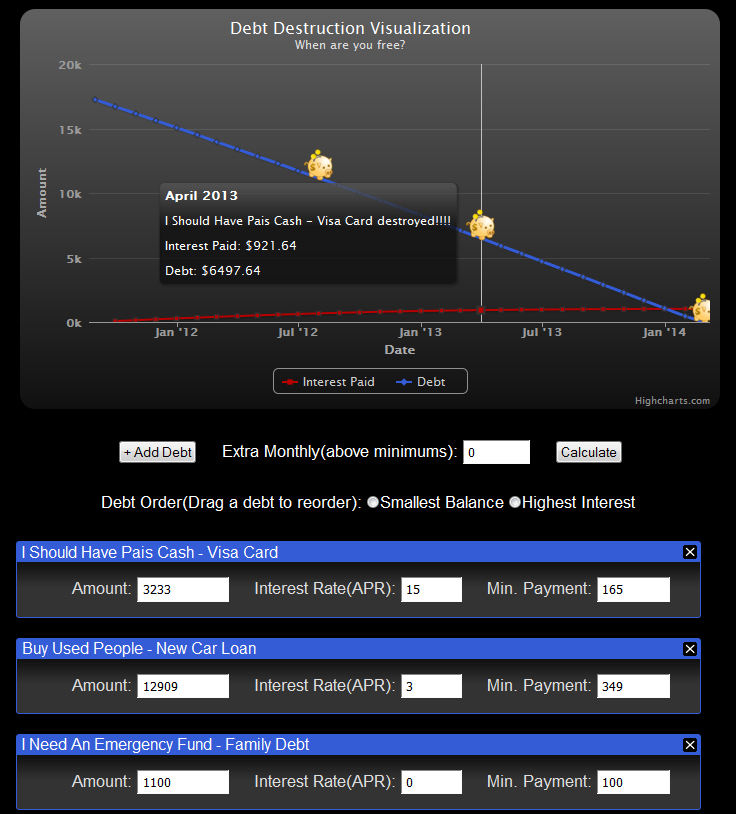
I can’t say that the thought has never crossed my mind. In fact, a case of “Buyers Remorse” arrived almost immediately upon purchase, but it never fully set in, instead it comes and goes. On one hand our van (2004 Honda) is by far the nicest vehicle that either me or my wife have ever owned. The leather seats are easy to keep clean, it has a smooth ride, and the DVD system is great for long trips. On the other hand, we are paying almost 10% of our take-home income on something that just transports us from point A to point B.

Guess which one of these babies is paid for?

Guess which one of these babies is paid for?

What where we thinking?

It was early in the summer of 2006 and my wife and I were expecting our 2nd child. We knew it would be tough to fit two car seats and our dog in my old car (a 2000 Ford Contour), so we thought about doing the unthinkable…buying a mini-van!

Since we were given a gift subscription to Consumer Reports, we knew the highest rated Mini-Vans were made by Toyota and Honda. So on a random rainy Saturday, we drove to the lot in my Ford, and drove home in a Honda. So much for following Consumer Report’s advice!!!

Looking back I’d like to plead temporary insanity, because if I remember correctly we also bought a brand new hide-a-bed that same week. Obviously we were going to need a hide-a-bed since child #2 would be taking over the guest room. Plus it has to be a nice one because it’ll be in my wife’s office…I can count the number of times that hide-a-bed has been used on one hand.

Back to the issue at hand:

From a debt elimination standpoint, it’s a no-brainer. Kelly Blue Book says the van’s retail value is $16,800. which is about $5,000 more than we still owe on it. So we could sell it, buy a another van for probably half the price and pay off the old van debt in no time.

But I’d have to add the cost of alimony and child support to my debt because when this idea is brought up with my wife, she says it’s a deal breaker. **Note, this is an exaggeration. My wife wouldn’t leave me if I sold our van. But I do think she’d find subtle ways of torturing me little by little. Plus I’m pretty sure I’d be locked out of the sugar shack for a very, very long time.**

What to do?

Our plan is to ride out the payments (only 37 more to go), keep up on the routine maintenance and drive it forever. Or as long as we can, whichever is longer. At least that was our plan before we came upon The Happy Rock. Perhaps one of you has a better idea. I hope to get some comments on this matter, the previous one I’ve gotten have been really good.

No pressure.

Until next time,

-DD

» Filed Under Debt Elimination, Psychology of Debt, Psychology of Spending

5 Creative Ways to Reduce Your Debt

Posted by The Happy Rock on July 22, 2008

cut up credit card

This is a guest post contributed by Heather Johnson, who writes on the subject of Discover rewards programs. She invites your feedback at heatherjohnson2323 at gmail dot com.

Whether we can officially call the economic downturn we’re currently experiencing a recession, we can all agree that it’s harder and harder to keep your head above water these days.  If you’re like me and in debt then you are feeling the pinch even more so.  Being in debt is always a terrible feeling but it’s worse when your dollar just doesn’t go as far as it used to.  The high gas prices and soaring cost of food have made being in debt as bad as it’s been in decades.  While there are no easy ways to get out of debt, there are ways we can stem the tide.  Here are a few ideas for you as you try to crawl out your umbrella of debt:

  1. Cut up your cards or toss them away for the time being. Consider relying on cash for the foreseeable future.  This will put you in a position where you are weaning yourself off your reliance on credit cards.  You may want to keep a low interest credit around for extreme emergencies.
  2. Talk to your boss about a raise. This may sound like the boldest move you could make but it’s not so far-fetched.  Presuming you have a good track record at work you could be in line for a promotion or a raise.  Go to your boss and talk about your options.  Express desire to take on more responsibilities.  Being proactive will increase your chances at earning that much needed raise.
  3. Be proactive. Talk to your lenders personally and let them know you’re taking ownership of your debt.  This will make them more likely to be lenient if further problems arise down the road.
  4. Get the best deal you can on your utilities. This is a great way to increase your savings.  Spend some time online and find out if you’re overpaying for any of your utilities.  20 or 30 bucks a month off your bills will go a far way in helping you confront your debt issues.
  5. Be creative. If you own your house or rent an apartment with an extra room, consider renting out it out to pick up some extra cash.  Look around and see if you have any appliances or anything of considerable value that you can sell to increase your cash flow.  Now is the time to make cash and if you have to think outside the box then so be it.

» Filed Under Debt Elimination, Guest Posts

Community In Action - Debt Free With Attitude

Posted by The Happy Rock on July 19, 2008

Determination

Here are the posts from around the personal finance community that struck a cord with me.

First, celebrate with debtfretter as they destroyed $27,000 in just 370 days.

JD @ GetRichSlowly shares about some of the patterns that kept him in debt.

Tony @HelpMyCashGrow talks about how personal finance is all about attitude. I think it is mostly about behavior, but our attitude and passions do effect our behavior.

DebtFreePlayBook reminds us that life goes much deeper than money. When you are eliminating debt, money usually becomes your sole focus, but the reason you are getting out of debt should be for purposes much deeper and more meaningful than money itself.

Finally Broke Grad Student talks about few of the physical reason why he hates cash. I have explored a similar topic with the benifits and drawbacks of spending cash, so I can apprecaite is perspective and humor.

» Filed Under Links

You Will Have The Same Salary In 20 Years - A Case For Career Advancement

Posted by The Happy Rock on July 18, 2008

I will keep this one simple. 

Assuming that you just get end of the year raises that keep up with inflation(3-4%), you will be making the same amount in 20 years that you are making now relitave to the cost of goods. Obviously your actual salary will be higher in 20 years, but that salary will buy you the same amount of stuff.   If you started your job at $35,000, in 20 years you will be making almost twice that much at $67,287, but that will be the same as having a $35,000 job 20 years prior.

If this is a scary thought, don’t let fear paralyze you, but be motivated by the thoughts of a better position or career.  If you really want to advance your career, get out of debt.  It is a gigantic step that frees you to pursue positions that you couldn’t otherwise entertain with the chains of debt holding you back.

Here are two nice articles from the personal finance community to help get you started improving your career :

» Filed Under Careers

Daycare Dilemma - Exploring Ways To Cut Costs

Posted by The Debt Defier on July 17, 2008

If you have a job and kids, the issue of daycare is bound to come up. As my Nitty Gritty post showed, it is our biggest monthly expense. And I bet that is true for a lot of families.

A few ways of dealing with this expense come to mind right away:

  1. Utilize daycare while both parents go to work.
  2. Work different shifts so one parent is always home with the little ones.
  3. Only have one parent work, so the other can stay home and raise the kids(full time job in itself).

My wife & I had good intentions and we planned to do option 3. And we went as long as we could. I think we lasted all of six months. We gave this up for a couple of reasons :

  • I didn’t really make enough to support a family on just my salary.
  • My wife under-estimated how much she would miss the social interaction the outside world offers.

Besides the obvious reason of wanting to raise our own kids, another reason we used option 3 at first was that finding a good daycare was tough.

REALLY TOUGH!

So when we switched gears and went to option 1 we were totally lost.

A good friend of ours pulled some strings and got us in the at-home daycare she was using for her kids. And that was going great until our daycare provider had a family emergency and was out of commission for three weeks. That really threw us for a loop. We weren’t lucky enough to have a local support system in place in case something like that happened.

So we begged our way into a center. As you can imagine the center was more expensive than the at-home care provider, but that was better than not having anything at all. My wife only worked part time so we only needed part time care. Surprising there isn’t much of a price break for this.

As I mentioned in my about page, my wife has started her own wedding photography business. Believe it or not, this actually increased our need for daycare. We went up from 20 hours a week to 34 hours (that is only during the busy season, May-Nov). And that is where we still are at.

The comments from my last post brought up the idea of one of us quitting our job and staying home to raise our kids. I’d love too, but my job is currently the higher paying one and we get our benefits from it. Plus the kids would drive me crazy in no time. And my wife is busy building up her own business, and that would be way more difficult to do with the kids around all the time.

Before I started my current job, I gave serious thought about working nights so we could utilize option 2. We have some friends who do this and it works quite nicely for them. But we decided that we enjoy seeing each other more than just on the weekends, so that idea was quickly put to bed.

While we like the center our kids are at (it’s also a preschool so now our 3 year old is actually learning some stuff), it’s weird that its the main reason why we’ll wait to have more kids. We just can’t afford to have 3 kids in daycare at once.

So there you have it, my breakdown of daycare. I’d love to hear your stories and strategies on how you deal with daycare. As always, I’m open to any and all ideas out there.

Until next time,

-DD

» Filed Under Children and Money

Tips for Developing a Net Worth Mentality

Posted by The Happy Rock on July 16, 2008

This is a guest post by Miranda Marquit.  You can read a little about her writing at the end of the post.

dollar-and-some-change.jpgOne of the more controversial subjects being canvassed right now in the world of personal finances is the idea that maybe a financial plan based around a monthly budget isn’t the way to go. Indeed, the monthly budget mentality is about living paycheck to paycheck and managing your resources rather than growing them. The alternative to the monthly budget mentality is the net worth mentality. This is a long-term, big picture mentality that is about wealth building rather than mere money managing.

With the monthly budget mentality, you can spend everything you make each month, as long as you have enough to cover it. But then you are left, at the end of the month, feeling anxious as you await your next payday or you are worried about what happens if your hours or benefits get cut at work, or — worse — if you lose your job. With the net worth mentality, you spend less than you earn every month and get into that habit. You actively build wealth.

Ideas that can help you shift from a monthly budget mentality to a net worth mentality

Shifting to a net worth mentality requires that you change how you think about money, and then change your practices to go with it. After a while, you develop habits that become part of your life. Here are some ideas that can help you make the change from a mentality that considers only budget, to one that is focused on net worth:

  • Find ways to spend less than you earn every month. One of the first steps is to stop viewing your paycheck as something that you spend. Most people see the paycheck and make a list of things they need or what to spend it on. View your paycheck as a tool to help you achieve wealth. This means that you can’t spend all of it every month. Even after savings and retirement type things, there should be money left over in your checking account at the end of the month. This might mean cutting some things out and learning to prioritize your spending.
  • End impulse buying. If you have a net worth mentality (and the checking account padding to go with it) you can spend money on fun things. In fact, you should spend money on fun things every once in a while. But impulse buying can be a way of keeping you in the budget mentality. Think about what you are spending your money on. Do you need it? Will the fun it imparts be of a lasting variety? For big purchases, plan it out. And, even for small purchases, give some thought before you buy.
  • Set long term financial goals. Create long term goals for growing your wealth. Create a long term financial plan that goes beyond the monthly budget.
  • Look for ways to add multiple income streams. Living paycheck to paycheck in a monthly budget mentality usually means that your only source of income is your job. Can you find other ways to bring in some income? Investing, hobbies and other opportunities can provide you a way to take the money you have and leverage it into something even larger. Just be careful that you don’t get involved in anything too risky.
  • Reduce your debt. Debt is one of those things that diminishes net worth. And making a monthly payment feeds into the monthly budget mentality. Try to get out of debt, and live a lifestyle that keeps you out of debt.

When you develop a net worth mentality, and start living in such a way that invites you to grow wealth, you can actually experience less money stress in your life. Having that paycheck right now, and in a specific amount, no longer seems as important. And you have the security to know that if something happens, you won’t be in immediate trouble because you have a safety net.

Miranda Marquit edits information on debt consolidation for DestroyDebt.com. She also writes on personal finances for YieldingWealth.com.

» Filed Under Financial Succes, Guest Posts

They Are Worth It

Posted by The Happy Rock on July 14, 2008


father-sons-worth-it.jpg

A beautiful dose of motivation to get your finances in order.

Photo Credit - Squiggle(Flickr)

» Filed Under Children and Money, Debt Elimination

Community In Action - Debt Elimination Party

Posted by The Happy Rock on July 12, 2008

money-party.jpgI haven’t shared some links from the community in a while, but I plan to add this back in as a regular series.  It is great to be inspired by some of the other PF writers.

Current Links :

Taking a queue from Paid Twice I will change my language from debt reduction to debt elimination.  Reduction is too cozy and comfortable, elimination is mean and ferocious, and that is what it takes.

Nice Circles has the right idea by letting her dream of being a writer fuel her debt elimination.

Frugal Dad shares an extensive list of places to cut some money out of the budget.

Links From The Recent Past :

RC shares how he negotiated $150 off his repair bill after the work was done.  That just doesn’t feel right to me, but it never hurts to ask.

Silicon Valley Blogger shares some nice tips to increase your income, which by the way is often an over looked part of a debt elimination journey.

NCN talks about breaking the credit habit.

Alissa @ On Purpose Living talks about their envelope system.

Finally, Ryan @ A Debt Reduction formula took a big step in beating his debt and sold his motorcycle!

» Filed Under Bloggers, Debt Elimination

The Nitty Gritty - Details Of My Financial Hole

Posted by The Debt Defier on July 11, 2008

Before I get too far on this journey to financial freedom, I figured it was time to come clean on just where I stand debt wise.

As of today July 11th, 2008 my wife & I owe:

  • $95,108.62 - Mortgage
  • $11,843.96 - Car Loan
  • $6,130.00 - Student Loan
  • $1,226.92 - Credit Card Balance

When I see it listed, it doesn’t seem so bad.  The total of $114,000+ is scary to think about, but I feel it’s quite manageable.  I now just have to figure a way to manage it.

Here’s what I have to work with:

Income:

$3500 - monthly take home pay.

Expenses:

  • $830 - House Payment
  • $330 - Car Payment
  • $105 - Student Loan Payment
  • $950 - Daycare bill
  • $100 - Electric bill (in winter this is $400+)
  • $100 - Phone & Internet
  • $50 - Water, sewer, & garbage fees
  • $100 - Insurance (Auto & Life)
  • $500 - Food
  • $60 - Retirement savings
  • $45 - Contributions to church
  • $130 - Gas

Total = $3,300

I usually am able to pay off the credit cards each month.  Which are normally double what they are this month, but I paid this month’s daycare bill late enough that it missed my card’s cutoff date. Of course this means that next month’s bill will be HUGE, but I’ll cross that bridge when it comes.  And for the past couple of years I’ve also been making small extra payments to the student loan ($20-$50 a month), but you can see that there isn’t much left at the end of the month to do a whole lot with.

In a future post (probably next week) I’ll dissect our biggest expense…DAYCARE.

But in the meantime, I’ll be curious to see the results of my financial tracking to see where I can cut some corners.  It’s been a challenge trying to keep track of every cent spent (especially during the long holiday weekend) but I keep reminding myself that it’ll be worth it in the long run.

I know that The Happy Rock is full of great ideas on saving money, but I bet that you all have some great penny-pinching tips and tricks as well.  If you do, please share them…because I need all the help I can get.

Until next time,

-DD

» Filed Under About The Debt Defier

Cheaper Than Cheap Tip Of The Week #7 : Embrace Your Diurnal Cycle/Sleep When Its Dark

Posted by The Happy Rock on July 10, 2008

“Cheaper Than Cheap” is a recurring tip series about frugality. The idea is to provide potentially helpful frugality tips that border on fanatical or fictitious to the point of becoming humorous. Love them or hate them, let’s hear what you think. Tip #6 was on Wash and Reuse Plastic Baggies.

“Early to bed, and early to rise, makes a man healthy, wealthy and wise”

-Benjamin Franklin

paddling-river-sunrise.jpgThis particular Ben Franklin personal finance gem still holds true to day.  Simply put diurnal means: sleep when it is dark and be active when it is daylight. For those on the east coast of the US that would mean going to bed at about 9 p.m and waking up at 5 am; a solid 8 hours sleep.  The plan adjusts a little with the longer nights of winter, but just make sure you are up when the sun comes up to take full advantage.  This was originally part of the impetus for daylight savings time.

So how does it save you money? It saves electricity among other things.  Little to no lighting is needed during the daylight hours and activities like playing outside during the day use no electricity.  Simple as that.

There are other benefits to getting up early too.

n

What do you think of tip #7 - Embrace Your Diurnal Cycle/Sleep When Its Dark?

View Results

Photo by FreeWine(Flickr)

» Filed Under Frugality, Money Savers

keep looking »

feed icon
feed icon

Archives

Categories

the happy rock's picture, the happy rock The Happy Rock is a personal finance and personal development community dedicated to creating positive change that propels us towards success.

Best Of...

Sponsors

Advertisements

Books THR is Reading

Recent Comments

Top Commentators

Affiliates

Save on all the things you love to do! Click here for your favorite eBay items Text Link Ads

Social Networking

Stats

Performancing Metrics Blog Statistics

Search

Deals